

Where To Attach a Tow Strap Without Hooks
|
Key Takeaways
|
When it comes to moving a stationary vehicle, the safest and most effective way to do it yourself—without a tow truck—is to use the right tools, like a tow strap and shackle hitch receiver, the right way, and follow the right safety rules. Here’s exactly where those attachment points are on your vehicle, front and rear, so you’re not guessing under pressure.
Safe Attachment Points: Where to Actually Hook Up
|
Point |
Safe to use? |
Why |
|---|---|---|
|
Screw-in recovery eye |
Yes |
Factory rated, usually stored with the jack kit |
|
Frame-mounted recovery point |
Yes |
Bolted to the frame and rated for recovery loads |
|
Shackle hitch receiver in the rear receiver |
Yes |
Rated shackle mount, strongest rear option |
|
Factory tow hook |
Yes |
Rated, if it’s a recovery hook and not a shipping hook |
|
Hitch ball |
No |
Not rated for recovery; can shear off and become a projectile |
|
Bumper or bumper bracket |
No |
Cosmetic; tears away under load |
|
Axle or differential |
No |
Bends housings and damages seals |
|
Suspension or steering arm |
No |
Bends easily and affects control afterward |
|
Thin shipping tie-down loop |
No |
Rated for holding a car on a truck, not for pulling it |
If your vehicle doesn’t have a visible tow hook, check three places in order. Start with the owner’s manual, which usually shows the exact recovery point and any cover you need to pop off. Next, look for a small plastic cap in the front or rear bumper; it pries off to reveal a threaded hole underneath. Finally, check the jack storage compartment, usually under the cargo floor or trunk liner: most modern cars ship with a screw-in recovery eye stored right next to the jack and lug wrench. Thread it in fully by hand before attaching anything to it.
Front versus rear: recovery through a shackle hitch receiver in the tow vehicle’s rear receiver is usually the strongest option, since it’s rated for exactly this kind of load. Up front, you’re relying on whatever rated eye or frame-mounted point the vehicle ships with; there usually isn’t a receiver up there.
Choosing a tow strap
The idea that tow straps and recovery straps are one and the same is a dangerous misunderstanding. The difference between a tow strap and a recovery strap is that a tow strap is used for slowly moving a disabled vehicle - but not one that is stuck - from one point to another, while a recovery strap is used for pulling and dragging vehicles out of places that are difficult to get out of. Tow straps without hooks are critical for dynamic recovery, as they stretch and recoil to free stuck vehicles. These hookless straps provide superior safety, flexibility, and strength compared to hooked versions.
However, if you are trying to free a 4x4 that is stuck in a ditch, you should not use a tow strap with hooks but rather a recovery strap. This is because the hooks could be dangerous. Always check strap ratings versus vehicle weight, and make sure the ratings are at least 1.5 times the vehicle weight to ensure safe recovery. It is important to carry the right recovery gear, including properly rated straps and shackles, for safe vehicle recovery. Consider Rhino USA’s Recovery Tow Strap, the industry gold standard for vehicle recovery.

Rhino USA Recovery Tow strap
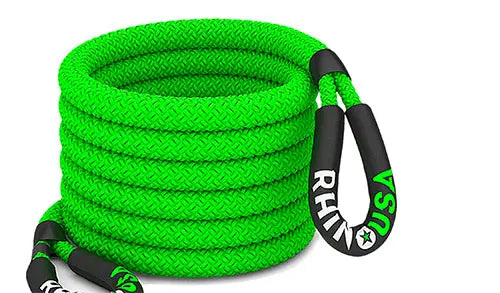
The Rhino USA Recovery tow strap is an ideal solution. Recovery straps traditionally come without hooks and feature loops sewn into the ends, similar to a sling, for secure vehicle recovery. Made from strong, elastic nylon webbing, this strap allows for a snatching force during recovery, making it effective for vehicle recovery in mud, snow, or sand. The triple-reinforced loop ends reduce the risk of damaging your vehicle's bumper or paint and allow for the use of various dedicated recovery accessories, enhancing safety and versatility. It has a break strength of 31,518 pounds, as determined by lab testing, and also comes with heavy duty protective sleeves and a heavy-duty drawstring bag to keep all your recovery gear organized—perfect for keeping your vehicle ready for any situation!
How to Attach a Loop-End Tow Strap
Loop-end straps skip the failure point hooks introduce, but only if you connect them correctly. Here's the right way to do it:
-
Confirm both vehicles have a solid connection point. A mounted D-ring or shackle on a hitch receiver is ideal. A bumper works too, but only if it's secured with proper grade 8 hardware and has a mounted D-ring or shackle. Never attach to an axle or a suspension arm.
-
Slide the strap's loop end through a D-ring or shackle on the recovery point. A shackle hitch receiver is the preferred option. If neither is present, use the factory tow points as the next-best option.
-
Connect the opposite end of the strap the same way, using a rated D-ring or shackle. Ideally, don't run the strap back through its own loop. It can be done in a pinch, but a D-ring or shackle is always the better connection.
-
Pull the connection tight and remove any slack before the pull begins.
-
Recheck both connections before anyone applies throttle.
Never knot a recovery strap; a knot can cut its rated strength by half or more. Never girth-hitch a strap around a sharp frame edge, which saws through webbing under load. And never hook a strap's loop back onto itself around a hook; a loop needs a rated shackle or D-ring, not a metal edge to bite into.
Soft Shackles Versus Steel D-Rings
Steel D-rings are simple, affordable, and stand up to repeated abrasion. They work best on a rated, mounted point, like a shackle hitch receiver or bumper-mounted D-rings, which makes them the practical choice for flat towing and everyday connections.
Soft shackles are lighter, float, and won't send a chunk of steel through a windshield if something lets go. They're also the preferred choice for joining more than one tow strap or a kinetic rope, which makes them a solid pick for kinetic recovery.

The dangers of using a tow strap with hooks
A tow hook on tow straps is dangerous. While they are still sold, there have been plenty of accidents involving them and we recommend not using them.
Hookless straps provide a 100% secure connection when used with D-ring shackles or soft shackles. Soft shackles are a recommended option for vehicle recovery, as they reduce the risk of injury compared to traditional steel shackles and offer a lightweight, versatile, and strong alternative.
As a general rule of thumb, tow straps that come with hooks do not include latches in their design. Even though a hook is equipped with a safety latch, the latch can become damaged and stop working properly. Never attach a tow strap to bumpers or non-structural parts of a vehicle.
MUST READ: 5 Ways a Tow With Hooks Strap Can Kill You
Tow hooks can become loose and fall off
It is possible for the hook to move to a different spot or just be positioned in such a manner that it will become loose and fall off after it has been subjected to a significant amount of force while you are repositioning your rig in preparation for a draw. Before towing, always ensure that shackles or attachment points are properly connected and locked to the vehicle’s tow points or frame to prevent accidental disengagement. When tightening the tow strap, do so gradually until it is taut, and avoid rapidly accelerating before the line is tight to reduce the risk of sudden jerks or the strap coming loose. When this happens, the hook transforms into a missile that has the potential to kill or damage anybody in its path, no matter how slow you are going.
Not as secure as you may think
They also give a false sense of security. Using soft shackles or steel shackles provides a much safer and more reliable connection, reducing the risk of failure. Tow straps should always be attached to rated tow points on vehicles, such as frame-mounted or recovery points, rather than non-structural parts like bumpers or the vehicle body. Tow straps with hooks are NOT secure, due to the fact that a hook has an opening which would allow for a change in angle to cause the tow strap to fly off. Tow straps with hooks are also not specifically designed for vehicle recovery, they are designed for towing a vehicle in a straight line at a constant speed.
Towing Vehicle Preparation
Before you begin any towing operations, it’s crucial to properly prepare the towing vehicle to ensure a safe and efficient recovery. Taking the time to get ready can make the difference between a smooth tow and a risky situation for both the towing vehicle and the stuck vehicle.
Start by parking the towing vehicle on stable, level ground whenever possible. This helps prevent slipping or shifting during the tow, especially if the stuck vehicle is in mud, sand, or snow. Next, inspect your recovery straps and all attachment points on the towing vehicle, such as the receiver hitch or dedicated recovery points, to confirm they are free of damage and securely mounted.
Double-check that the tow strap is rated for the weight of the stuck vehicle and that it is not frayed or worn. Attach the strap to a solid recovery point—never to suspension components, bumpers not designed for towing, or any plastic parts. Make sure the strap is laid out straight and free of knots or twists, which can weaken the line during the pull.
Before connecting the vehicles, communicate clearly with the driver of the stuck vehicle. Both drivers should agree on signals and the plan for the tow. The stuck vehicle should be placed in neutral gear (or as recommended by the manufacturer), and the steering wheel should be straight to help guide the vehicle out smoothly.
Finally, ensure that all bystanders are at a safe distance before starting the tow. With both vehicles and equipment properly prepared, you can proceed with confidence, knowing you’ve taken the right steps for a safe and successful recovery.
What to Use Instead: Shackle Hitch Receivers and Soft Shackles
So, if using a tow strap with a tow hook to move cars is dangerous, how can you pull the vehicle safely and without tow hooks?
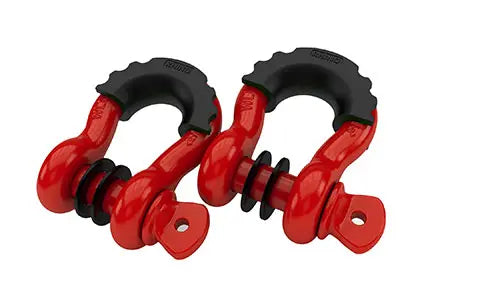
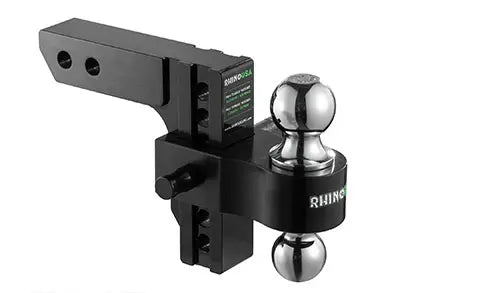
The simple answer is to use the Rhino USA shackle hitch receiver or other essential accessories like D shackles or soft shackles for connecting tow straps to the vehicle's frame or rated recovery points. The shackle hitch receiver has a break strength that is greater than 41,000 pounds, and it is designed with a d-ring-shaped connection point so that you may attach your recovery tow strap or kinetic rope to it. Shackles come in different sizes and must be chosen based on the load and job requirements, and it's crucial to ensure the shackles have their Working Load Limits (WLL) cast into them before purchase. Soft shackles, made from high-strength synthetic fibers, provide exceptional strength, flexibility, and ease of use, and are preferred over steel shackles for heavy-duty towing due to their safety and durability. Soft shackles reduce injury risk by flexing under high tension and can prevent damage to both the tow strap and the vehicle's tow points, saving money over time. Steel shackles have traditionally been used in heavy-duty towing but are now often replaced by soft shackles for these benefits. Shackles and chains are used in many industries for material handling of loads much greater than vehicle recovery. You can get shackles at any 4WD store, 4WheelParts, eBay, etc.
When attaching shackles, always connect them to the vehicle's designated tow points on the frame, rear, or front bumper, using threaded holes or threads, and never to the axle or non-structural parts like the bumper. The use of a hitch pin and hitch ball is part of the receiver hitch setup, but improper use can be dangerous, so always follow manufacturer guidelines. For added security, you can use a 'basket' configuration by looping a sling or soft shackle around a hook or tow point, which helps prevent slip and increases safety. Proper attachment is a critical part of the job of safe vehicle recovery, especially for trucks. Just make sure everything is properly rated for the load, do your research, and you're good to go.
To use one, you need only unscrew the pin, loop your tow strap through the ring, and then simultaneously screw the pin into the recovery point and the shackle. If you have a winch that has a hook attached to the end of it, you can easily loop the hook through the D-ring. In some cases, you will not even need to remove the D-ring from the tow point.
Whichever you choose, start from the recovery gear collection; it’s the fastest way to see every rated shackle, strap, and hitch accessory built for this job side by side.
Featured Product: Rhino USA Shackle Hitch Receiver
Make yourself visible to others
When you recover your vehicle from traffic, you should take precautions. It's a good start to have your safety equipment on you. Consider a plastic reflective triangle to alert any other vehicle of the recovery.
Inspect equipment and put them away safely
Check your recovery tow strap or tow rope and shackle hitch receiver carefully afterward. When you get home wash the straps and put them back into the handy drawstring bag that comes with it. This will ensure they are secure for next time you come to need them.
As always, we hope you enjoyed reading about where to attach a tow strap without hooks, and we sincerely hope that you never use a tow strap with hooks due to the dangers. Make sure to check out Rhino USA for industry-leading recovery gear and off-road accessories!

FAQs
What is the difference between a tow strap and a recovery strap?
The degree of “give” that each type of strap possesses is the primary differentiator between the two. Because tow straps have very little or no elasticity, they are the ideal choice for towing a disabled vehicle. Recovery straps feature elasticity that enables kinetic energy generation, allowing them to return to their original length after stretching; the elasticity causes the strap to immediately return to its initial length and helps pull the vehicle out of the sticky situation along with it, which makes recovery straps far better suited to extracting a stuck vehicle.
Can you tow from a tie-down loop under the bumper?
No. Those loops are rated to hold a car still during shipping, not to pull it. Under real load, they tear out of the bumper bracket, and the bumper itself isn’t a structural part. Use a rated recovery point instead: a frame-mounted eye, a screw-in recovery loop, or a shackle hitch receiver.
Is it safe to tow from the axle?
No. The axle and differential housing aren’t designed for pulling loads, and hooking a strap there can bend the housing, damage seals, or crack the differential cover. Stick to a manufacturer-rated recovery point, even if the axle looks like the sturdiest thing underneath the vehicle.
What size tow strap do I need for my vehicle weight?
Match the strap’s rated capacity to at least 1.5 times your vehicle’s curb weight, then round up if you’re recovering from mud, sand, or an incline. A 3-inch, 30,000+ lb-rated strap covers most trucks and SUVs; lighter cars can size down, but building in that safety margin matters more than saving a few dollars on a thinner strap.
- Choosing a selection results in a full page refresh.