

Best Boat Trailer Winch: 2026 Buyer's Guide
The best boat trailer winch makes loading a one-person job. The wrong one turns every ramp into a two-person fight at sunset with a tired arm and a boat that won't seat against the bow stop. The piece of hardware doing the work is small, but the difference between a quality winch and a budget big-box winch shows up on the first windy launch.
This is the no-fluff guide to picking the right boat trailer winch. Manual versus electric, gear ratios, capacity by loaded boat weight, mount and bolt-pattern basics, strap versus cable, and what to look for when an old winch starts slipping. Every Rhino USA boat trailer winch and winch strap ships with our lifetime warranty. American owned, family operated, real people behind every order.
What Is a Boat Trailer Winch
A boat trailer winch is the hand-cranked or motor-driven mechanism on the front of a boat trailer that spools strap, cable, or rope onto a drum to pull a boat up the trailer. The winch mounts to the winch post at the trailer tongue, the strap attaches to the boat's bow eye, and a few cranks of the handle seat the boat against the bow stop.
The winch has three jobs: pull the boat up the trailer at the ramp, hold the bow in position during transport, and let the boat slide off the trailer at launch. All of that has to happen in wet, salty conditions year after year without seizing up.
Manual winches use gear reduction with a hand crank to multiply operator effort. Electric winches use a 12V motor with built-in gearing to do the work without crank effort. Both styles have their place.
Manual vs Electric Boat Trailer Winch
Manual is the right call for most recreational boaters. Electric earns its place on heavier rigs and high-frequency use.
Manual Winches

Manual winches dominate the boat trailer market because they are simpler, lighter, more affordable, and need no battery or wiring. A quality manual winch with the right gear ratio handles a 3,000 to 4,000 lb boat with reasonable hand effort.
Manual makes sense for:
- Boats under 4,000 lbs
- Operators with reasonable hand strength
- Trailers with no electrical system
- Owners who launch and load less than once a week
The trade-off is effort. A heavy boat plus a steep ramp plus a long cable run can make manual winching a workout. For everyday use with sub-20-foot boats, manual wins on simplicity and cost.
Electric Winches
Electric winches are the answer for heavy boats, frequent users, and single-handed loading. A 12V electric winch wires to the trailer or tow-vehicle battery and pulls the boat onto the trailer with a remote or panel switch.
Electric makes sense for:
- Boats over 4,000 lbs
- Frequent launches (multiple per week)
- Single-handed loading
- Operators with limited hand strength
The trade-off is cost, complexity, and extra failure points. Electric winches need wiring, battery management, and weather-sealed components. The motor and switch can fail in ways a hand crank cannot.
For most recreational boaters with sub-20-foot boats, a quality dual-speed manual winch handles the job. The Heavy-Duty Boat Trailer Winch is built for that use case.
Gear Ratios Explained: Single, Dual, Triple
Gear ratio is the most important spec on a manual winch. It controls how many handle turns it takes to spool one foot of strap and how much pulling effort each turn produces.
Single-Speed Winch
One fixed gear ratio. Simple, durable, fewer moving parts, lowest cost. Pulling power is fixed.
Single-speed winches handle boats up to about 1,500 to 2,500 lbs depending on gear ratio. The right call for jet skis on PWC trailers, small jon boats, and 12 to 14 ft fishing boats.
Dual-Speed Winch
Two gear ratios in one winch. Shift to low gear (high pulling power, slow strap travel) for the heavy initial pull, then shift to high gear (lower power, faster travel) once the boat is moving.
Dual-speed is the right call for most recreational boats in the 16 to 22 foot range. It handles boats up to about 3,500 to 5,000 lbs depending on the specific ratios.
Triple-Speed Winch
Three gear ratios for maximum versatility. Lowest gear handles the worst-case load (boat hung up on the bunks, headwind, low water). Middle gear handles normal loading. Top gear spools slack strap fast.
Triple-speed earns its cost on heavier boats, frequent use, and ramps with awkward conditions.
Boat Trailer Winch Capacity by Boat Weight

The first rule of winch sizing: match capacity to the loaded boat weight, not the dry hull number. A 14-foot aluminum fishing boat with a motor, gas, batteries, gear, and a livewell can hit 1,500 lbs even though the bare hull is 700 lbs.
General sizing:
- Boats under 1,500 lbs (jet skis, 12 to 14 ft fishing boats): 1,500 lb winch, single-speed
- Boats 1,500 to 2,500 lbs (14 to 16 ft aluminum, small fiberglass): 2,500 to 3,000 lb winch, single or dual-speed
- Boats 2,500 to 4,000 lbs (16 to 18 ft fiberglass, larger aluminum): 3,500 to 5,000 lb winch, dual-speed
- Boats 4,000 to 6,000 lbs (18 to 22 ft fiberglass, pontoon, walkaround): 5,000 to 7,000 lb winch, dual or triple-speed
- Boats over 6,000 lbs (large pontoon, 22+ ft, sport boats): 7,500+ lb winch, often electric
Always size the winch above the loaded boat weight. A winch running at maximum capacity all the time wears faster than one running at 60 to 70 percent of rated capacity.
The Heavy-Duty Boat Trailer Winch covers the bulk of the recreational boat market with the gear ratio and capacity to handle most 16 to 22 ft boats on hand effort.
Cable vs Strap
The second major decision after manual versus electric. The winch spools steel cable, synthetic rope, or polyester strap onto a drum.
Polyester Strap
Polyester webbing is the most common choice on modern boat trailers and the right pick for most recreational use.
Benefits:
- Floats on water (drops in the strap don't sink to the bottom)
- Doesn't kink or birdcage like cable
- Will not rust
- Safer if it lets go (no whip-back energy)
- Easier on bare hands
The trade-off is UV degradation. A strap left in the sun for years gets chalky and weak. Replace polyester straps every three to five years or at the first sign of fraying.
For replacement or upgrade, the Boat Winch Strap with Hook is a 2" x 20' polyester strap with the right hook end for most trailer winches.
Steel Cable
Steel aircraft cable was the standard for decades and still shows up on commercial and heavy-duty trailers. Cable handles higher loads than strap of equivalent diameter and resists abrasion better.
Trade-offs: rusts in salt water, kinks and birdcages with rough handling, sinks when dropped, whips dangerously if it breaks under load, and broken strands cut hands and gloves.
Steel cable is the right call for very heavy boats and commercial applications. Most recreational users go strap.
Synthetic Rope
Synthetic winch rope (typically UHMWPE) is a newer option that combines high strength with low weight, no rust, and no whip-back. Synthetic rope costs more than strap or cable but lasts a long time if cared for.
Synthetic rope is the right call for owners who want premium performance and accept the higher initial cost.
Boat Trailer Winch Mounting and Installation Basics
Most boat trailer winches mount to a vertical winch post at the front of the trailer with two or four bolts.
- Confirm the bolt pattern. Standard boat winch mounts use a common 3-inch or 5-inch bolt pattern, but some trailers are non-standard. Measure before ordering.
- Check the winch post height. The strap should run roughly level from the winch drum to the boat's bow eye. A winch mounted too low pulls down on the bow. Too high lifts it.
- Use grade 5 or grade 8 bolts with washers and lock washers. Boat trailer hardware lives in salt water. Budget bolts rust and fail. Stainless or grade 8 zinc-plated is the right call.
- Apply marine-grade thread locker. Vibration from highway driving works hardware loose. A drop of thread locker keeps the bolts seated.
- Test under load. Load the boat, crank the winch, and look for flex, twist, or movement at the mount. Movement means undersized bolts or a worn post.
- Inspect and grease annually. The winch drum, gears, and ratchet pawl all benefit from a marine grease wipe-down once a year.
Handle Styles and Ergonomics

Manual winch handles come in several styles. The differences matter when you crank 50+ times per launch.
- Standard offset handle. The classic L-shape. Affordable, common, gets the job done. Hand fatigue on long pulls.
- Folding handle. Folds against the winch body for storage. Same crank effort as a standard handle.
- Grip-improved handle. Padded or molded grip for reduced hand fatigue. The right call for arthritis, frequent use, or cold-weather launching.
- Removable handle. Lifts off the winch shaft for theft prevention or storage. Useful in marina lots.
How to Pick the Right Winch for Your Boat
A simple decision tree.
1. What is the loaded boat weight?
The starting point. Take the dry hull weight from the spec sheet, add motor weight, add fuel weight (about 6 lbs per gallon), add battery weight, add gear and ice. The total is what the winch has to pull.
2. How long is your trailer?
Longer trailers need longer strap or cable. Most winches ship with 20 to 25 ft of strap, which fits most single-axle trailers. Tandem-axle trailers and longer rigs may need extended-length straps.
3. Manual or electric?
Boats under 4,000 lbs and casual use, manual. Boats over 4,000 lbs or frequent launching, electric.
4. What gear ratio?
Single-speed for small boats. Dual-speed for most recreational use. Triple-speed for heavy boats or rough loading.
5. Strap or cable?
Polyester strap for almost all recreational use. Steel cable or synthetic rope for very heavy boats or commercial.
Boat Length Sizing Cheat Sheet
A general guide for matching boat length to winch capacity. Always verify against loaded boat weight, not just length.
- 12 to 14 ft boats: 1,500 lb winch, single-speed, polyester strap
- 14 to 16 ft boats: 2,000 to 3,000 lb winch, single or dual-speed, polyester strap
- 16 to 18 ft boats: 3,500 to 4,500 lb winch, dual-speed, polyester strap
- 18 to 20 ft boats: 5,000 lb winch, dual or triple-speed, polyester strap or cable
- 20+ ft boats: 5,000 to 7,500 lb winch, triple-speed or electric, cable or synthetic rope
Boat Winch Maintenance
Marine hardware lives a hard life. Salt, UV, dirt, road grime, freeze-thaw cycles. A few habits make winches last decades instead of seasons.
- Rinse with fresh water after every salt water trip. Salt eats hardware. A 30-second rinse extends winch life by years.
- Grease the drum shaft and gears annually. Marine grease, applied with the winch open. Prevents rust on internal moving parts.
- Inspect the strap monthly. Look for fraying, broken strands, or UV damage. Replace at the first sign of wear.
- Check the ratchet pawl. The pawl prevents the drum from spinning backwards under load. A worn pawl can let the boat slide back during loading. Replace if it doesn't engage cleanly.
- Test the brake or lock. The winch should hold the boat in position when the handle is released. A winch that drifts backwards has a worn brake or pawl. Replace before next use.
- Replace the strap every three to five years. Polyester degrades in UV regardless of how good it looks. A five-year-old strap can fail under load with little warning.
Top Picks: Rhino USA Boat Trailer Winch Hardware
Two pieces of gear cover the bulk of what most boat owners need.
Heavy-Duty Boat Trailer Winch
The right pick for most 16 to 22 foot boats. Steel construction, dual-speed gearing, polyester strap with hook included. Standard bolt pattern fits most trailer winch posts. Backed by our lifetime warranty.
Spec callouts:
- Heavy-duty steel housing
- Dual-speed gearing for high pulling power and fast retrieval
- Polyester strap with marine-grade hook
- Standard mount pattern fits most boat trailer winch posts
- Marine-grade hardware throughout
Use case: 16 to 22 ft fishing boats, runabouts, ski boats, walkarounds, pontoons up to about 3,500 lbs.
Boat Winch Strap with Hook

Replacement or upgrade strap for most trailer winches. 2" x 20' polyester webbing with marine-grade snap hook. The right call when an old strap is fraying, faded, or no longer holding the boat securely.
Spec callouts:
- 2" polyester webbing for UV and salt resistance
- Forged steel hook with retainer clip
- Standard hardware compatible with most winch drums
- Lifetime warranty
Use case: replacement strap for any boat trailer winch using 2" polyester webbing.
Bow + Stern: Complete the Tie-Down
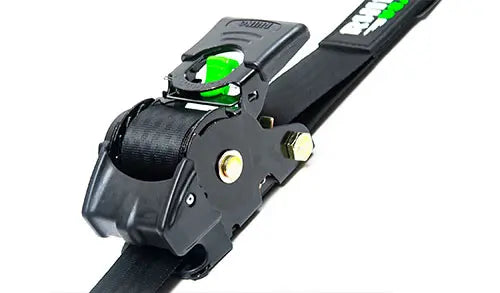
The bow winch holds the front of the boat. The stern needs a tie-down too. For that, the 2" x 43" Retractable Transom Tie-Down Straps (2-Pack) keeps the stern locked to the trailer with auto-retracting webbing that never tangles in the storage box. The Transom Tie-Down Set is the traditional 2" x 4' option. Pair either with the winch up front for a complete bow-to-stern securement.
Common Boat Winch Mistakes
A few repeat offenders that ruin winches early.
- Skipping the freshwater rinse after salt launches. The single biggest cause of premature winch failure.
- Letting the strap sun-bake all season. UV destroys polyester. Cover the winch when the trailer sits.
- Cranking past the stop. Forcing a winch past full retraction strips gears.
- Dropping the handle in mid-load. A loaded winch will spool out if the pawl isn't fully engaged. Don't release the handle until the pawl clicks home.
- Ignoring strap wear. A frayed strap is a strap about to fail at the worst possible moment.
- Running a winch undersized for the boat. Match capacity to loaded weight with margin. Undersized winches wear fast and can let the boat slide back.
Why Rhino USA Boat Trailer Hardware

Rhino USA is American owned, family operated, headquartered in California with offices in Murrieta, Austin, and Woodstock. Every boat trailer winch and strap in our lineup ships with a lifetime warranty. If anything ever fails under normal use, we replace it. Real customer reviews on every product page run in the thousands at high ratings, real reviews from real boaters, not paid placements. Phone-answered customer service. Straightforward warranty replacement.
FAQ
What size winch do I need for my boat?
Match winch capacity to the loaded boat weight. Boats under 1,500 lbs use a 1,500 lb winch, 16 to 18 ft fiberglass boats use a 3,500 to 4,500 lb winch, 18 to 22 ft boats use a 5,000 lb winch.
Manual or electric boat trailer winch?
Manual for boats under 4,000 lbs and casual use. Electric for boats over 4,000 lbs or frequent launching.
What is the best boat trailer winch?
For most recreational use, a quality dual-speed manual winch with polyester strap. The Heavy-Duty Boat Trailer Winch covers most 16 to 22 ft boats with the gear ratio, capacity, and corrosion resistance to last through years of saltwater use.
Can I use a regular winch as a boat trailer winch?
Boat trailer winches have specific design features (drum width, marine hardware, hook style) that general-purpose winches don't always have. Use a marine-rated winch for boat trailer applications.
How often should I replace the winch strap?
Every three to five years, or at the first sign of fraying, UV damage, or stiffness.
Polyester strap or steel cable on a boat winch?
Polyester strap for most recreational boats. Steel cable for very heavy boats or commercial use.
What gear ratio do I need on a boat winch?
Single-speed for small boats under 1,500 lbs, dual-speed for most 16 to 20 ft boats, triple-speed for heavy boats or tough loading conditions.
Are electric boat trailer winches worth it?
For heavy boats, frequent users, or single-handed loading, yes. For casual use with smaller boats, manual is fine.
What is the bolt pattern on most boat trailer winches?
Standard boat winch mounts use a 3-inch or 5-inch bolt pattern. Measure your existing winch post before ordering.
How do I install a boat trailer winch?
Bolt to the winch post with grade 5 or grade 8 hardware, apply marine thread locker, run the strap level to the boat's bow eye, then test under load.
Do boat trailer winches need maintenance?
Yes. Rinse with fresh water after salt launches, grease annually, inspect the strap monthly, and replace at the first sign of wear.
Can I leave the boat strapped to the winch in storage?
Yes, but UV degrades the strap faster in storage. Cover the winch or release tension during long storage.
What is a winch ratchet pawl?
The pawl is the spring-loaded lever that drops into the gear teeth on the winch drum to prevent backward rotation under load. A worn pawl is unsafe.
How much does a boat trailer winch cost?
Quality manual winches typically run $50 to $150. Heavy-duty dual-speed and triple-speed winches typically run $100 to $250. Electric winches typically run $150 to $500+.
Does the boat winch hold the boat during transport?
The winch holds the bow in position. Most boats also need transom tie-downs to keep the stern from lifting at highway speed.
What is a transom tie-down?
A strap that secures the back of the boat to a fixed point on the trailer. Pairs with the bow winch for full boat securement. The Transom Tie-Down Set is the traditional setup. The Retractable Transom Tie-Down Straps eliminate loose webbing.
How long should a boat winch last?
A quality marine-grade winch with annual maintenance lasts 10 to 20 years. Budget winches fail in two to three seasons.
Can I winch a boat onto a trailer by myself?
Yes, with a properly sized winch and good ramp technique. Single-handed loading is one of the main reasons to choose a dual-speed or electric winch.
Why does my winch strap kink or twist?
A twisted strap usually comes from cross-spooling on the drum. Spool the strap evenly across the drum width during retrieval to prevent kinking.
Do I need to grease a boat trailer winch?
Yes. Annual application of marine grease to the drum shaft, gears, and pawl prevents rust and extends winch life.
What is the warranty on a Rhino USA boat trailer winch?
Lifetime warranty. If the winch ever fails under normal use, we replace it. American owned, family operated.
Related Articles
- Boat Trailer Winch Strap: Replacement Guide & Best Picks
- How to Tie Up a Boat: Dock + Trailer Step-by-Step Guide
- 10 Things to Check Before You Tow
- Retractable vs Traditional Ratchet Straps
- Choosing a selection results in a full page refresh.