

ATV Cargo Bag vs Cargo Rack: Which Should You Get?
If you ride a quad and you've ever wedged a chainsaw between your knees on the way back to camp, you already know the answer. Hauling gear on an ATV without proper storage is a bad time. The fix is either a cargo bag, a cargo rack, or both. Each one solves a different problem, and the right pick depends on what you carry, how often you ride, and how you want to mount your load.
This guide breaks down the difference, when to use which, and how to lock everything down so it stays put when the trail gets rough.
ATV Cargo Bags at a Glance

A cargo bag is a soft-sided pack that mounts over your front or rear rack, or directly to the frame on a quad without a factory rack. Most are made from heavy denier nylon with reinforced bottoms and weather-resistant zippers. They are the right call when your gear is soft, mixed, or needs quick zipper access on the trail.
Bags shine for overnight rides where you are carrying a sleeping bag, change of clothes, food, and tools all in one place. The best way to think about it. A cargo bag is a duffel that bolts to your machine. You can also use a cargo bag without a roof rack on a UTV by strapping it to the bed rails or roll cage with soft loops and bungees.
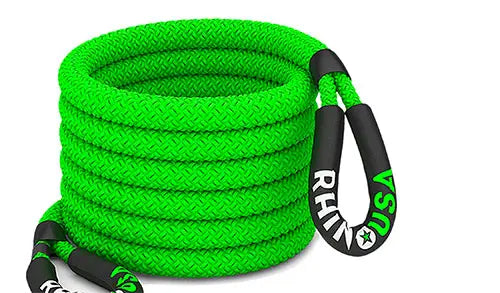
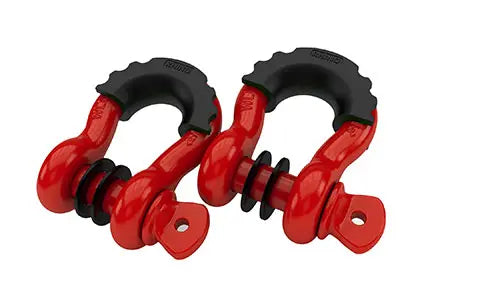
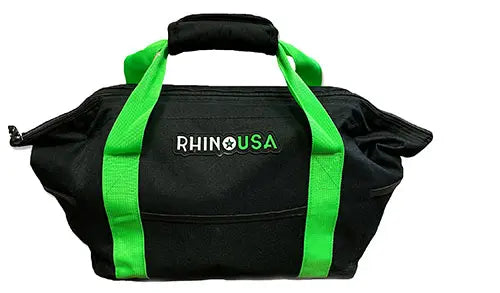
For an organized soft-bag setup, Rhino's Heavy-Duty Storage Bag and the upgraded Ultimate Recovery Gear Storage Bag carry recovery rope, shackles, gloves, and tools in dedicated compartments. The Ultimate Tactical Backpack is a great option for day rides where you want gear on your back, not the bike. For a full camp setup, the Camp Kitchen Organizer breaks down trail cooking gear into one zip-up unit.
ATV Cargo Racks at a Glance
A rack is a steel or alloy platform you bolt to your quad's OEM mounting points. It gives you a flat, hard surface to strap loads to. Racks handle irregular cargo a bag cannot. Firewood, fuel cans, hunting gear, a folded ice chest, an extra tire. They also let you stack and lash heavier loads because the deck distributes weight to the frame instead of the seat or fenders.
A cargo rack is used for hauling anything you do not want squished, anything too big for a bag, and anything you need to add or remove fast at a worksite or trailhead.
When to Use a Cargo Bag

Pick a bag if you mostly carry:
- Soft gear (sleeping bags, jackets, food)
- Tools you want behind a zipper, not lashed open
- Smaller, lighter loads (under about 40 lbs)
- Mixed loads that need compartments
Bags are also the right pick if you store your ATV outside or in a storage unit between rides, since the contents stay protected from dust and light rain when the bag is closed.
When to Use a Cargo Rack

Pick a rack if you regularly haul:
- Firewood, fuel cans, or jerry cans
- A spare tire or wheel
- A chainsaw or hand tools
- Hunting gear (bow case, decoys, treestand pieces)
- A cooler
Racks are also more useful on both sides of the machine. Front rack for tools and recovery gear, rear rack for camp gear and game. If you ride two-up, a rear rack with a small bag on top is the most flexible setup.
How to Properly Secure Your Load (Either Way)
A bag or a rack is only as safe as the straps you use to lock it down. Most riders we hear from have bought their first set of cheap straps from a big-box store, then bought a real set after the first one snapped on a fire road. Do not skip this step.
Match the strap to the load:
- Bungees for soft, light loads on top of a bag or rack. The 28 Piece Bungee Cord Set ships with multiple sizes for the way most riders pack. Small bungees for loose items, longer ones to wrap a duffel.
- Cambuckle straps for medium loads where you need quick on/off. The 1.5" x 8' Cambuckle Tie-Down Straps (2-Pack) are easier to release than ratchets and will not over-tighten on soft cargo.
- Soft loops for anything you would otherwise hook to a painted or anodized part you do not want to scratch. The 1.6" x 17" Soft Loop Tie-Down Straps (4-Pack) wrap around bars and frames so your hook never bites the finish.
- Axle straps for trailering the ATV itself. The 2" x 38" Axle Tie-Down Straps (4-Pack) loop directly around the axle for a clean, low anchor point.
Use four anchor points whenever possible. Front-left, front-right, rear-left, rear-right. Two straps will hold a load on flat dirt. Four will hold it through a creek crossing. For the full walkthrough on threading a ratchet correctly, see our How to Thread, Use, and Release a Ratchet Strap guide.
Cargo Bag and Rack Combos
Most experienced riders run both. A rack on the rear of the quad for the bulky stuff, and a cargo bag mounted on top for the soft gear. The rack carries the weight, the bag adds organization and weather protection. Add a small front rack with a tool bag and you have a setup that handles weekend rides, hunting trips, and property work without rebuilding the cargo plan each time.
Pair the dual setup with the Bungee Cargo Net Set to lock loose smaller items on top of the bag. Net first, then the bungees, then a couple of cambuckles for redundancy.
A Note on Insurance and Mileage
If you mount a roof rack to your tow vehicle for ATV trips, most carriers do not require you to add it to your policy unless it is a permanent modification. Ask your insurer if you are not sure. As for gas mileage, a loaded roof rack will cost you a few percent in efficiency at highway speeds. A cargo carrier mounted to a hitch sits in cleaner air and costs less.
The Rhino USA Picks for ATV Hauling
We make the parts that hold your load to whichever bag or rack you mount on your quad. Every Rhino USA strap, bag, and tie-down is built by an American owned and family operated team with real people on the phone and a lifetime warranty across the line. If a strap fails, we send you a new one. That is it.

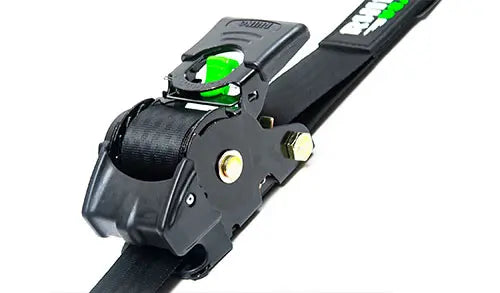
For most riders, the right starter kit is one set of bungees, one set of soft loops, and one set of cambuckle straps. If you also haul a UTV or motorcycle behind your truck, add a set of axle straps and a pair of 1" x 10' Retractable Ratchet Straps to the box.
FAQ
Can you put a cargo bag on top of a sunroof?
No. A sunroof is glass and is not a structural mounting surface. Use a hitch-mounted cargo carrier or a proper roof rack with crossbars.
Can I use a cargo bag without a roof rack?
On a UTV, yes. Strap the bag to bed rails or the roll cage. On an ATV, you will want at least a small front or rear rack to give the bag a flat platform.
Is it okay to store an ATV outside?
Short term, yes, with a cover. Long term, a garage, shed, or storage unit is better. UV and rain will age plastics, seats, and electrical connectors.
Should I store my ATV with a full tank of gas?
Yes if you are using ethanol-free fuel and a stabilizer. A full tank reduces condensation in the tank during seasonal storage.
Is 700 hours a lot for an ATV?
Not for a well-maintained machine. Routine valve adjustments, oil and filter changes, and clean air filters matter more than the hour count.
What is a cargo rack used for?
Hauling tools, fuel cans, firewood, hunting gear, a spare tire, or anything too bulky for a soft bag.
What straps should I use for ATV cargo?
Bungees for soft light loads, cambuckle straps for medium loads, soft loops to protect finishes, and ratchets for heavy or trailered loads.
How do I tie down an ATV in a trailer?
Use four axle straps, one at each corner, anchored to the trailer floor or wall points. Add a wheel chock under the front tire for extra stability.
Related Articles
- Best ATV Cargo Racks: Storage and Hauling Solutions
- Retractable vs Traditional Ratchet Straps
- Best Heavy-Duty Ratchet Straps: 2026 Buyer's Guide
- How to Properly Use Soft Loop Tie-Down Straps
- How to Tie Down a Motorcycle
- Choosing a selection results in a full page refresh.