




The Man Behind the Brand: Who is Harley Davidson?
Introduction
This article explores the origins of Harley-Davidson, clarifies who the founders were, and explains how their vision shaped one of America's most iconic motorcycle brands. It is intended for readers curious about the people behind the Harley-Davidson name and the company's early history.
Quick Summary: Who Founded Harley-Davidson?
Harley-Davidson is not a single person, but a company founded in 1903 in Milwaukee, Wisconsin, by William S. Harley and the Davidson brothers: Arthur, Walter, and William A. Davidson.
William S. Harley: Chief Engineer and Treasurer
Arthur Davidson: Marketing and Sales
Walter Davidson: First President
William A. Davidson: Operations
Founders and Their Roles
To help readers quickly understand the contributions of each founder, here is a summary of their roles:
-
William S. Harley: Served as chief engineer and treasurer, responsible for technical innovation and financial oversight.
-
Arthur Davidson: Led marketing and sales, expanding the brand’s reach and building its customer base.
-
Walter Davidson: Became the first president, guiding the company’s overall direction and leadership.
-
William A. Davidson: Managed operations, ensuring efficient production and quality control.
Introduction to the Founder
The Founding Team
Harley-Davidson is not a single person, but a company founded by William S. Harley and the Davidson brothers. The name "Harley-Davidson" comes from the partnership of four men:
-
William S. Harley
-
Arthur Davidson
-
Walter Davidson
-
William A. Davidson
William S. Harley, one of the key visionaries behind the Harley-Davidson Motor Company, was born in 1880 and grew up in Milwaukee, Wisconsin. From a young age, Harley was fascinated by mechanics and engineering, which led him to work at a local bicycle factory when he was just 15. It was there that he reconnected with his childhood friend, Arthur Davidson, who shared his enthusiasm for innovation and machines. Together, Harley and Davidson began experimenting with ways to improve the motorized bicycle, driven by a desire to create something truly groundbreaking. Their shared ambition and technical skills laid the foundation for what would become the first Harley-Davidson motorcycle, marking the beginning of a legendary partnership and the birth of the iconic Harley-Davidson Motor Company.
Early Years of the Company
Early Innovations
The early days of the Harley-Davidson Motor Company were defined by determination, creativity, and a relentless pursuit of excellence. In 1903, William Harley and Arthur Davidson set up shop in a modest wooden shed in the Davidson family’s backyard, where they built the first Harley-Davidson motorcycle. This early model featured a single-cylinder engine and a leather drive belt, setting the stage for future innovations. As word spread about their reliable and powerful motorcycles, the company quickly outgrew its humble beginnings.
Key Milestones
-
1901: William S. Harley began sketching a small engine blueprint.
-
1903: Harley-Davidson was officially launched in a Milwaukee backyard.
-
1905: The first production motorcycle was released, known for its single-cylinder engine.
-
1906: The first Harley-Davidson factory was built on Chestnut Street in Milwaukee.
-
1907: Harley-Davidson was incorporated, with Walter Davidson as the first president.
-
1909: Introduction of the V-Twin engine, capable of reaching 60 miles per hour.
By 1906, Harley-Davidson had established its first factory, and just a year later, the company was officially incorporated. Walter Davidson, Arthur’s brother, took on the role of the first president, while William Harley served as chief engineer. The company’s reputation was further solidified through its participation in motorcycle racing events like the American Motorcyclists Endurance Run, where Harley and Arthur Davidson showcased the durability and performance of their machines. These formative years set the tone for Harley-Davidson’s enduring legacy in the motorcycle industry. With a strong foundation established, Harley-Davidson soon introduced its first production motorcycle, setting the stage for future innovations.
The Man Behind the Brand: Who is Harley Davidson?
Growth and Expansion
Harley Davidson, the man, the myth, the legend, or more like four men. Actually, Harley Davidson was not named after one person. It was named after one man with the last name Harley and three men with the last name Davidson. The four of them—William Sylvester Harley and the Davidson brothers (Arthur, Walter, and William Davidson)—formed the founding team responsible for the iconic brand that we know today, Harley Davidson. William Sylvester Harley, in particular, played a pivotal role as the company's chief engineer and treasurer, Arthur Davidson led marketing and sales, Walter Davidson was the first president, and William A. Davidson managed operations.
Harley Davidson has been an American company for well over a century. It was originally founded in 1903 in Milwaukee, Wisconsin, a city shaped by the Milwaukee Road Railroad and a strong industrial heritage. William S. Harley began sketching a small engine blueprint in 1901, which set the stage for the company's creation. William Harley and Arthur Davidson were childhood best friends who grew up in the same neighborhood in Milwaukee. They both had an undying love for bicycles, mechanics, and engineering, which led William to eventually take a job at a bicycle factory during his teenage years. He soon became a draftsman for Barth Manufacturing, along with Arthur, where William successfully designed his own internal combustion engine, which was based off of the French de Dion-Bouton engine.
Arthur and William then decided that they wanted to build their own motorcycle as a dream project, however, were unsuccessful, which led them to realize that they needed more people in their team that knew a little more about motorcycles and machines to help them create their vision. They then contacted Arthur’s older brothers Walter and William (Bill), who decided to help them create their motorcycle. Early collaborators like Henry Melk and a skilled tool room foreman also contributed to the project. The four of them then were able to create a working and successful prototype, which was the first ever working Harley Davidson motorcycle created in the Davidson family's backyard. In 1903, Harley-Davidson was officially launched in a Milwaukee backyard, marking the humble beginnings of what would become an iconic brand.
MUST READ: The Scoop: Harley Davidson Electra Glide vs Street Glide
The first production motorcycle was released in 1905 and was known for its single-cylinder engine. The first motorcycle models that were created in 1903 were with a buckle crank, but eventually turned into two-cylinder engines, which they were able to successfully make in only six years (1909). These two-cylinder engines were called the V-Twin and go up to 60 miles per hour. The V-Twin engine was patented and helped the company grow to making over 3,000 bikes per year. During this time, William Harley went to college and earned a mechanical engineering degree from the University of Wisconsin-Madison. In 1906, the first Harley Davidson factory was built on Chestnut Street in Milwaukee, marking a significant milestone for the company produced motorcycles. Harley Davidson eventually incorporated in 1907, where the Davidson brothers and William Harley formed a cohesive leadership team, with Walter becoming the first President and General Manager for the company until he died in 1942. The company's success was evident as, in just a few years, Harley-Davidson developed a strong reputation for quality and innovation.
Arthur Davidson was the secretary and sales manager of the company, in which he succeeded in getting the military, United States Postal Service, and police nationwide to all use their bikes. Before 1920, Arthur already had the United States Postal Service using over 4,500 motorcycles to deliver mail. Along with this, he began the Harley Davidson Service School, which trained mechanics to become qualified to work on their motorcycles. Arthur Davidson was responsible for marketing and sales at Harley-Davidson, and the first Harley Davidson dealer, Carl H. Lang, played a crucial role in expanding the dealer network, which was key to the company's growth.
William Harley would go on to be the company’s chief engineer and treasurer until he died of heart failure on September 18th, 1943 at the age of 62. His personal life included his marriage to Anna Jachthuber and their children, including Ann Mary. Their first “factory” was a wooden shed in the Davidson family’s backyard, and is actually the same location of the current headquarters of Harley Davidson today. William S. Harley was also an avid racer, often testing and racing bikes at State Fair Park, which contributed to the company's innovation and the development of the harley set—groups of motorcycles or components designed for specific purposes. William S. Harley was later honored with induction into the motorcycle hall.
Walter Davidson is the man who is responsible for the Harley Davidson clothing and accessories that we all know today. Although they have changed and developed over the years, his idea of branding their company on wearable items has become a prominent piece of the brand.
MUST READ: How Tie Down a Motorcycle
During World War I, Harley-Davidson supplied thousands of motorcycles to the U.S. military, which significantly boosted brand awareness. Then, during World War II, the United States Military placed an order for over 90,000 bikes produced—primarily the WLA model—for use during the war. This was huge for the company and led to them being on the global market. Today, the brand that started out being just a few friends in their backyard working on their dream is now a billion dollar company and American powerhouse, with Harley Davidson factories in the U.S. and around the world. The founding fathers of Harley-Davidson created a brand synonymous with freedom and adventure, and H D remains an iconic brand and a testament to the company's success.
Transitioning from the company's early growth, let's explore the debut of their first motorcycle and how it set the standard for the industry.
The First Motorcycle
The debut of the first Harley-Davidson motorcycle in 1903 marked a turning point in the motorcycle industry. This pioneering bike was equipped with a single-cylinder engine, a leather drive belt, and a compact fuel tank capable of holding just over a gallon of gasoline. Designed for both reliability and everyday use, the motorcycle could reach speeds of up to 25 miles per hour—a remarkable feat at the time. In 1905, Harley-Davidson released its first production motorcycle, known as the Model 1, which quickly gained a reputation for quality and performance. The success of these early models helped define Harley-Davidson as a leader in the motorcycle industry, setting a standard for innovation and craftsmanship that continues to this day.
As Harley-Davidson established itself as a leader, the company continued to innovate with new models and designs.
Models and Designs
Throughout its storied history, Harley-Davidson has continually pushed the boundaries of motorcycle design, introducing a wide array of models that have become legends in their own right.
Evolution of Engine Design
From the early days of single-cylinder engines, the company evolved to develop the powerful V-twin and Big Twin engines, which became synonymous with the Harley-Davidson name. The introduction of the Big Twin engine in the 1910s marked a new era of performance and style, attracting riders who craved both power and reliability.
Iconic Models
Over the decades, Harley-Davidson has released iconic models such as the Fat Boy and the Street Bob, each offering unique features and a distinct riding experience. Whether it’s the classic lines of a vintage cruiser or the stripped-down appeal of a modern bobber, Harley-Davidson motorcycles have always stood out for their innovation, quality, and unmistakable style.
With a legacy of innovation and design, Harley-Davidson’s models have left a lasting impact on motorcycle culture. One model, in particular, stands out for its influence and popularity.
The Importance of the Fat Boy Model
The introduction of the Fat Boy model in 1990 was a defining moment in Harley-Davidson history. With its bold, muscular design, wide front forks, and signature solid-disc wheels, the Fat Boy quickly became a symbol of American motorcycle culture. Its distinctive fuel tank and comfortable, low-slung seat made it a favorite among riders looking for both style and substance. The Fat Boy was designed as a cruiser, offering a smooth ride and impressive road presence, which helped solidify Harley-Davidson’s reputation as a leader in the cruiser segment. Its enduring popularity is a testament to the company’s ability to blend tradition with innovation, and the Fat Boy remains one of the most sought-after Harley-Davidson models, inspiring countless riders and influencing the design of many new motorcycles in the Harley-Davidson lineup.
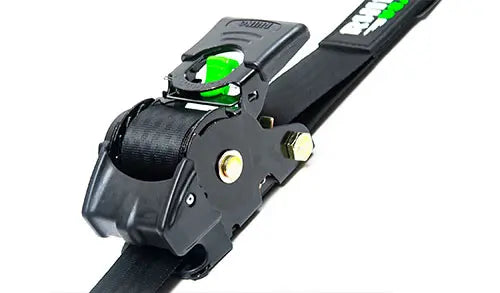
Featured Product: Rhino USA Harley Davidson Motorcycle Tie Down Straps
If you are looking to secure your prized Harley Davidson with the strongest and most-trusted motorcycle tie down straps, look no further than Rhino USA. Lab tested at 5,208lb max break strength, our heavy duty ratchet strap come with a 100% guaranteed lifetime warranty, offered by a family-owned father-son business from Murrieta, California.

- Choosing a selection results in a full page refresh.