

Kinetic Recovery Rope Explained
Have you been thinking about adding a kinetic recovery rope to your personal arsenal of recovery gear, but are not totally sure of how it works or if it is necessary? No need to worry, we’ll do our best to put all of your unsure thoughts at ease.
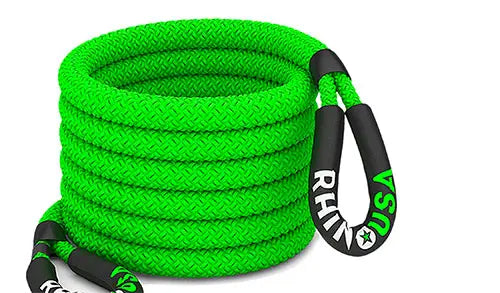
Featured Product: Rhino USA Kinetic Recovery Rope
How does a kinetic rope work?
A kinetic recovery rope, also sometimes called a snatch or yanker rope, are stretchy ropes used to recover stuck vehicles. Snatch ropes and yanker ropes are types of kinetic recovery ropes specifically designed to stretch and absorb energy during recovery. Unlike traditional tow straps or chains, kinetic ropes offer significant advantages due to their ability to stretch and store kinetic energy, making them more effective and safer for vehicle recovery. They are able to recover these vehicles by stretching and effortlessly transferring kinetic energy. If you are used to using a non-stretch rope to recover your vehicle, such as a tow strap, you may be thinking that using a stretchy rope may seem a little strange or non-functional, but trust us when we say that they are extremely effective and have lots of other benefits as well.
By using a recovery rope with stretch, the rope tends to have a longer lifespan and be much more durable than your non-stretch rope. The ability of a kinetic recovery rope to stretch up to 20% to 30% in regular use (and sometimes up to 40%) is what makes it unique compared to non-elastic tow ropes or straps. Along with this, the stretch also helps with the general recovery of your vehicle by being great at absorbing shock. The smooth transfer of force from kinetic ropes drastically reduces the shock load on both vehicles during recovery. These ropes can also be incredibly helpful when you are in the snow, mud, or even sand due to the ability to leave slack in the rope.
Another benefit to having a kinetic recovery rope is that a smaller vehicle will actually be able to recover a larger vehicle because the kinetic recovery rope is able to give both parties an extra bit of power. The stored kinetic energy in a kinetic rope is released in a controlled manner, which can effectively double or triple the pulling force compared to a static strap. When a stuck vehicle is pulled out using a kinetic rope, the rope generates and absorbs force, making the recovery smoother and more effective. It is essential to connect the rope to secure, rated points on each vehicle to ensure safety and effectiveness—improper connection or use can lead to equipment failure or injury, so always follow proper techniques to manage the force involved and prevent accidents from happening during a recovery event. The kinetic recovery ropes are able to stretch up to 30 percent of their length, which in turn helps the recovery go a little more smoothly on both vehicles as well.
Key features of kinetic recovery ropes
When it comes to off-road recovery, having the right equipment can make all the difference—and kinetic recovery ropes stand out as an essential tool for any recovery kit. What sets a kinetic rope apart is its unique ability to stretch and store energy, which allows it to smoothly transfer kinetic energy from the recovery vehicle to the stuck vehicle. This stretch not only makes the recovery process more effective, but also helps protect both vehicles from sudden jolts or damage.
One of the most important features to look for in a kinetic recovery rope is its breaking strength. To ensure a safe and successful recovery, the rope’s breaking strength should be at least three times the gross vehicle weight of the vehicle you’re trying to recover. High quality kinetic ropes, like those from Bubba Rope and Yankum Ropes, are constructed with durable synthetic fibers and designed with a minimum tensile strength that can handle the toughest recovery situations. The rope diameter also plays a crucial role—thicker ropes generally offer higher breaking strength and greater ability to store energy, making them better suited for heavier trucks and off road vehicles.
Another key aspect is compatibility with soft shackles, which provide a secure and reliable way to attach the rope to both the recovery vehicle and the stuck vehicle. Soft shackles are lightweight, easy to use, and help reduce the risk of injury compared to traditional metal hooks. When setting up your recovery, always make sure to attach the rope to proper recovery points and double-check for any signs of wear or damage before starting the pull.
Kinetic recovery ropes are also designed with safety and convenience in mind. Their lightweight construction makes them easy to handle, store, and deploy—even in challenging conditions like mud, snow, or sand. Because they can extend up to 30% of their length, kinetic ropes provide a controlled, gradual pull that helps recover stuck vehicles without causing unnecessary strain on your equipment or risking injury.
When choosing a kinetic recovery rope for your recovery kit, consider factors like vehicle weight, rope diameter, and the types of terrain you’ll be tackling. Whether you’re dealing with deep mud, slippery snow, or loose sand, a high quality kinetic rope is essential for getting your vehicle back on the path safely. By understanding these key features and following proper recovery procedures, you can extend the life of your equipment, avoid costly repairs, and ensure every off-road adventure ends on a high note.
What size kinetic rope do I need?
If you plan on recovering a larger vehicle, it is important to determine the correct kinetic rope size by calculating the gross vehicle weight and multiplying by four, then searching for a rope that matches or exceeds that number. Also, consider different lengths of kinetic ropes to suit various recovery situations and vehicle sizes, as having the right length can improve safety and effectiveness. The last thing you need when recovering a vehicle is a rope with a minimum breaking load that is way too low for the job.
We have put together a super easy-to-understand kinetic rope guide to help you better decide what size and length of kinetic rope you need for your vehicle

Once you have found the proper kinetic recovery rope, you are one step closer to being able to recover a vehicle. For effective recovery with a kinetic rope, a second vehicle is required. Kinetic ropes can also be paired with other recovery gear, such as soft shackles or a winch, to enhance recovery effectiveness and safety. Before connecting the rope, the assist vehicle should approach the connection point in reverse and stop. Be sure to check and see that there is nothing in the way of the vehicle that needs to be recovered. This will help ensure everyone’s safety and the additional safety of the vehicles. Once you have done this, attach your kinetic recovery rope to both vehicles by their proper, secure, and rated recovery points, ensuring there are no sharp edges. Using an improper recovery point can lead to severe damage or potentially be very dangerous.
After you have done this, be sure that any parties around have moved away from the vehicles to a safe distance so you are able to safely perform the recovery. The unstuck vehicle can begin with slack in the line and start to drive, but the assist vehicle should not exceed 5 mph when using a kinetic recovery rope to avoid shock loading. It is important to have a driver in the vehicle that is being recovered as well to help guide the vehicle and help with additional grip, especially by checking the tires for proper traction and condition.

If a kinetic recovery rope seems like something that you would like to add to your recovery kit, check out Rhino USA’s Kinetic Energy Recovery Rope. The recovery rope comes in two sizes, ⅝”x 20’ and ⅞” x 20’. The ⅝” rope has a max break strength of 13,436 lbs and the ⅞” rope has a max break strength of 24,660 lbs. High-quality kinetic ropes typically cost between $100 and $200, depending on diameter and length. They usually feature reinforced eyes at each end to prevent wear at attachment points. ARB’s kinetic recovery straps usually have 20% stretch, while Yankum and Bubba ropes can stretch up to 30%, allowing for a smoother recovery process. As a rule of thumb, always select recovery gear based on your vehicle’s weight and recovery needs. Remember, a kinetic rope is a specialized, high-stretch nylon rope designed for recovering stuck vehicles by storing kinetic energy, and should not be used for towing, as it can stretch too far and become damaged. Winches are another important recovery tool that can be paired with kinetic ropes for more challenging recoveries. The rope is made of heavy duty synthetic fiber for extended durability and also comes with a lifetime warranty and a sticker pack!

Kinetic rope FAQ's
Where to buy a kinetic recovery rope?
Rhino USA offers a range of high-quality kinetic ropes designed to excel in off-road recovery situations. If you are looking to buy the best kinetic recovery rope, Rhino USA offers kinetic ropes from 5/8” x 20’ up to 1.25” x 30’. Bubba Rope produces the Original Power Stretch recovery rope for off-road vehicles. MAXTRAX recovery ropes provide more customization than many other manufacturers and are widely available throughout Australia and the U.S. Rough Country has been producing off-road accessories since 1975 and offers kinetic recovery ropes with a convenient storage bag.
How much does a kinetic recovery rope weigh?
The weight of a kinetic rope depends greatly on the size of kinetic rope. A 7/8” x 20’ weighs approximately 8.5 pounds, whereas a 1.25” x 30’ kinetic rope weighs 21.5 pounds. The 1.25” x 30’ rope is thicker in diameter and 10 feet longer, therefore, it has a much higher weight.
How do you clean and maintain a kinetic rope?
A muddy or dusty kinetic rope can be cleaned with warm soapy water and should be laid out to dry thoroughly after cleaning. Never pack a kinetic rope away if it is wet or dirty, and always check for any damage or fraying after use. If a kinetic rope starts to become overly stiff or is fraying, it is time to replace it. Proper care and maintenance help ensure the rope’s safety and performance during recovery operations.
- Choosing a selection results in a full page refresh.