


How To Let Air Out Of Tires: Using a Tire Deflator
How to let air out of tires is a crucial skill for vehicle owners and off-roaders who want to optimize safety, extend tire longevity, and enhance off-road performance. This step-by-step guide covers everything you need to know about safely deflating your tires, whether you're preparing for off-road adventures, correcting overinflation, or simply maintaining your vehicle. Understanding the right way to let air out of your tires can help you avoid common pitfalls and ensure your vehicle performs at its best.
What Is Tire Deflation?
Deflating a tire is the process of reducing the tire's air pressure to improve traction for off-roading or to correct overinflation. Before you begin, locate the valve stem on the tire to start the deflation process. Unscrew the cap from the valve stem before letting air out of the tire.
Why Let Air Out of Tires?
Letting air out of your tires is important for several reasons, especially for off-roaders and those traveling long distances. Here are the key benefits:
-
Better traction when off-roading
-
A more flexible tire shape, reducing damage when going over obstacles
-
Reduced pressure on your suspension and car body
-
Lower risk of over-inflated tires bursting
-
Less uneven tire wear
-
Increased surface area for better grip
By understanding when and why to let air out of your tires, you can maximize your vehicle's performance and safety in various driving conditions.
Once you understand the reasons for deflating your tires, the next step is to gather the right equipment.
What Equipment Do I Need?
To deflate your tires to the ideal tire pressure, you will need the following:
Tire Pressure Gauge
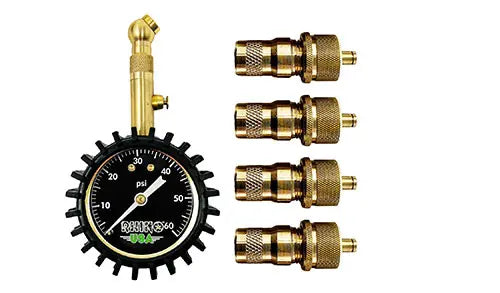
A tire pressure gauge helps ensure you've reached the ideal air pressure in your tires after airing down. The pro tire deflator kit comes with its own 60 PSI tire pressure gauge, complete with deflator valves.

Caps
You will need to ensure you have the correct cylindrical cap to top off your valves, whether they are plastic or chrome. Caps protect your valve stem, which holds the air in your tires. The pro tire deflator kit comes with its very own spare caps.
4-Way Valve Core Replacement Tool
This tool allows you to safely remove and replace your valves without damaging the outer edges of your tires. Without your core replacement tool, you'll need long needle nose pliers, a flat head screwdriver, or a blunt tool to hold your valve core. Rhino USA's 4-Way Valve Core Replacement tool is much better than using a tire pump or any other solutions from auto parts stores due to its efficiency and ease of use.

Air Compressor
While the aim is letting air out of your tires, if you see the air pressure is too low when checking tire pressure, you'll need an air compressor to pump it back up safely.
Once you have gathered your equipment, you are ready to begin the deflation process.
Common Methods to Let Air Out of a Tire
There are several ways to let air out of a tire, each with its own advantages:
-
Pressing the Valve Pin: Press the small metal pin in the center of the valve stem to allow slow air release.
-
Using a Tire Pressure Gauge: Some gauges can be pressed onto the valve stem to depress the pin and release air in a controlled manner, allowing you to monitor pressure as you go.
-
Using a Valve Core Tool: Unscrew the valve core from the valve stem for rapid air release. This method is quick but requires caution to avoid losing the core.
-
Using a Specialized Tire Deflator Tool: These tools can automatically release air to a preset PSI, making the process precise and hands-free.
Release air in bursts to monitor pressure without under-inflating. Always use a tire pressure gauge to check your progress and avoid over-deflation.
Now that you know the different methods, let's walk through the step-by-step process for safely letting air out of your tires.
How To Let Air Out Of Tires
Caution: Avoid over-deflating to prevent damage to the tire or handling issues. Over-deflation can cause the tire bead to separate from the rim, leading to failure. Driving on low-pressure tires can cause poor handling and excessive wear.
Step 1: Prepare Your Vehicle
-
Park your vehicle on level ground.
-
Ensure the vehicle is on a flat, stable surface and turn off the engine before deflating tires.
-
If necessary, use jack stands at the designated jack points to lift your car safely above the ground.
Step 2: Locate and Remove Valve Cap
-
Locate the valve stem on the tire to begin the deflation process.
-
Unscrew the cap from the valve stem and set it aside in a safe place.
Step 3: Use the Deflator Tool
-
Attach the deflator component from your kit to the valve stem.
-
Use the tool to remove the valve core from your tire, which will control the air pressure leaving your tires.
-
Listen for a hissing sound, which indicates air is being released.
-
If using a manual method, press the valve pin or use a tire pressure gauge to release air in small bursts.
Step 4: Monitor Tire Pressure
-
Use a tire pressure gauge to check the pressure as you deflate.
-
Each tire, from your rear tires to your front left and right tire, should have the same amount of air removed.
-
Continue releasing air until you reach the desired PSI.
Step 5: Reinstall Valve Core and Cap
-
Once the desired pressure is reached, screw the valve core back in using the 4-way valve core replacement tool.
-
Replace the valve cap to protect the valve stem.
-
If your valve cap is missing, use a replacement from your pro tire deflator kit.
Reminder: Check the recommended PSI on your driver's side door jamb to ensure proper inflation after adjustments. Always verify that the tire pressure is within the correct range for your vehicle.
Link To Product: Rhino USA Pro Tire Deflator Kit
Rhino USA's innovative new pro tire deflator kit is the only set you'll ever need to let the air out of your tires. Whether you are rock crawling, off-roading in sand, snow or mud, or simply have too much air pressure in your tires, this complete kit has everything you need to deflate your tires to the perfect tire pressure.

FAQ's
How Do I Know If My Tires Are Over Inflated?
Consult your owner's manual or the sticker inside your driver's door for advice on tire pressure. When using your original tires, you should have a recommended pressure inside the manual. Many car owners need to realize that in warmer seasons, the air in your tires takes up more volume, resulting in over inflation, too much air, and a set of over inflated tires. Over inflated tires will only reach half their expected lifespan. Over inflated tires will also result in lower gas mileage and fuel efficiency. In the cold weather, you will also have a maximum cold tire pressure, usually no more than 35 PSI.
How low to air down when off-roading
The recommended tire pressure for off-roading varies depending on the vehicle, tire size, and terrain. However, a common practice is to air down your tires to between 15-20 psi, depending on the situation. Airing down helps to increase the tire's contact area with the ground, providing better traction and stability on rough terrain. It also helps to reduce the risk of punctures and damage to the tires and rims. It is important to remember to re-inflate your tires to the recommended pressure once you are back on paved roads to avoid damaging the tires or affecting the vehicle's handling and safety.
Optimum Tire Pressure for Different Surfaces:
-
Dirt roads and uneven trails: Air down by up to 25%
-
Slick rock, loose terrain and rock crawling: Air down by around 35%
-
Soft surfaces, including mud and sand: Air down by 50%
- Choosing a selection results in a full page refresh.