

5 Ways Tow Straps with Hooks Can Kill You
Main Dangers of Tow Straps With Hooks
-
Tow straps with hooks are considered one of the most dangerous pieces of gear you can own.
-
The metal hook can cause serious injuries or fatalities by flying through windshields if it detaches under tension.
-
Tow straps usually come with hooks, which are not suitable for recovery operations due to safety concerns.
-
Using hooks for vehicle recovery is extremely dangerous because they are not designed to handle high shock loads encountered during extraction.
-
Tow straps with hooks can cause serious injuries if they snap or slip off during a recovery attempt.
-
Tow straps typically come with hooks that can slip off during use, creating a projectile hazard.
-
There are numerous reports of injuries and fatalities caused by the failure of tow straps with hooks.
Today, we are going to be talking about the dangers, and deadly mistakes of using a tow strap with hooks. Are Tow Straps With Hooks Dangerous? Absolutely—and this is a dire warning to you, your family, friends, and even acquaintances. This article is especially critical for off-roaders, vehicle owners, or anyone who may need to recover a vehicle, as understanding the risks can prevent serious injury or death. Share this information with everyone you know that may find it useful. These tow straps can be misleading and are still to this day sold in almost every automotive parts store in the U.S. Continue reading below for 5 of the most dangerous reasons you should avoid using a tow strap with hooks when recovering a vehicle.
Tow straps with hooks are considered one of the most dangerous pieces of gear you can own. They usually come with hooks, which are not suitable for recovery operations due to safety concerns. Using hooks for vehicle recovery is extremely dangerous because they are not designed to handle the high shock loads encountered during extraction. If a tow strap with hooks fails under load, the hook can become a deadly projectile, potentially causing serious injury or death. The metal hook can cause serious injuries or fatalities by flying through windshields if it detaches under tension. There are numerous reports of injuries and fatalities caused by the failure of tow straps with hooks, making it critical to understand why these should never be used for vehicle recovery.
Introduction to Vehicle Recovery
If you’ve ever been off-roading or found yourself with a stuck vehicle in the middle of nowhere, you know that vehicle recovery is more than just a test of patience—it’s a test of your gear and know-how. Vehicle recovery is the process of pulling a stuck vehicle out of mud, sand, snow, or any other sticky situation using specialized equipment. This isn’t just about brute force; it’s about using the right recovery gear, like recovery straps (also called snatch straps), d ring shackles, and proper tow hooks, to safely connect your towing vehicle to the one that’s stuck.
The key difference between a tow strap and a recovery strap is how they handle stress. Recovery straps are designed to stretch, absorbing the shock load when you yank a stuck vehicle free—think of it as a giant rubber band that helps prevent damage to both vehicles. Tow straps, on the other hand, are meant for moving a vehicle that’s already rolling, not for pulling it out of a hole. Using the wrong strap in a recovery situation can turn a simple rescue into a dangerous disaster.
When you’re out in the mud or tackling tough off roading trails, always make sure you’re using the right gear for the job. Connect your recovery strap to solid recovery points with d ring shackles, and never trust a random hook or bumper. Safety should always come first—because in vehicle recovery, the difference between a successful pull and a flying hook can be life or death.
1. Confusing a Tow Strap with a Recovery Strap

A deadly misconception is that tow straps are designed for recovery operations, but in reality, they are not—people often use tow straps as if they are the same as recovery straps, which is completely false.
A tow strap is intended for slowly moving a disabled car (one that is not stuck and can freely move) from point A to point B. For example, if you need to use tow equipment to pull a car that has broken down but is not stuck, such as towing it down the road to a nearby repair shop, it is appropriate to use a tow strap for this purpose.
On the other hand, a recovery strap—also called a snatch strap—is designed for freeing a stuck car and has elasticity to absorb shock during recovery operations. If you are trying to recover a stuck 4x4 from a ditch, you should not use tow straps with hooks; instead, use a recovery strap (snatch strap) for safe and effective vehicle recovery.
Tow straps with hooks are considered dangerous because they can fail under load, causing the hook to become a projectile and potentially cause serious injury or death. The metal hook can cause serious injuries or fatalities by flying through windshields if it detaches under tension. Tow straps usually come with hooks, which are not suitable for recovery operations due to safety concerns. Using hooks for vehicle recovery is extremely dangerous because they are not designed to handle high shock loads encountered during extraction. Tow straps with hooks can cause serious injuries if they snap or slip off during a recovery attempt, and they typically come with hooks that can slip off during use, creating a projectile hazard. There are numerous reports of injuries and fatalities caused by the failure of tow straps with hooks.
2. Lack of Stretch When Recovering a Vehicle

There is a simple reason you will find more tow straps with hooks VS. recovery straps when shopping your local auto parts stores, they are far less expensive to make. Why? Because tow straps with hooks are usually made with just polyester. Polyester is much cheaper than say, silk, or nylon. Normally, real recovery straps use a blend of poly/silk or poly/nylon, this allows for a strong strap with added stretch keeping you and your vehicle safe when performing a proper vehicle recovery. You do not want a strap with no stretch when recovering a vehicle, if that strap tears, the consequences could prove deadly.
3. Hooks do not Compare to D-Ring Shackles

If you are unsure of what a D-Ring shackle is, it is a steel piece of equipment used in conjunction with a shackle hitch receiver and a recovery strap. These heavy-duty D-rings are commonly used in vehicle recovery and have a working load limit of 4.5 tons. The shackle is secured with a screw-in pin, ensuring a fine and secure connection to strong recovery points. These features drastically outperform tow hooks when it comes to properly recovering a stuck vehicle. Below we will go over the average breaking strengths for both products to help give you a better understanding on these major differences.
A ¾” D Ring Shackle usually has a working load limit of 4.5 tons, with a safety factor of 6. This sets the minimum breaking strength of a D-Ring shackle at a whopping 57,000 lbs. Insert “your mom” joke here.
Now we will compare that to the typical hook found attached to a cheap tow strap. The safe working load limits of tow straps with hooks average around 3,000 lbs. and they have an average minimum breaking strength of 10,000 lbs. Hooks on tow straps can be made from low-quality steel, increasing the risk of failure. You will not need to do the math to see how dangerous this can be. Another good alternative like the d-ring shackle, is the shackle hitch receiver, which is also designed for a safe and quick off-road recovery.
4. The Appearance can be Totally Deceiving

At first glance, you may think (like many of us did) that this is a heavy-duty strap. After all, it has cool looking hooks on it. Therefore, so many people make the mistake of purchasing a tow strap with hooks for the wrong reasons, and in some unfortunate cases, have died as the result. I write this wishing I had been able to warn these poor folks of the dangers when using these straps for a recovery. You also need to keep in mind that most vehicles do not come pre-equipped with a secure recovery mount point, so you may experience an airborne bumper or two if you connect these hooks to a weak spot on a vehicle instead of a proper mount point. It is important to attach recovery straps to the frame hard-points of a vehicle, not to the bumper. If a strap or hook snaps under tension, it can fly through the air and cause serious injury or damage. Which actually leads us to our last warning for this article, these hooks can slip when you least expect.
5. The Tow Hook Can Slip and Kill You or Another

When it comes to recovering a vehicle, you would be smart to use a loop-end recovery strap and connect it to the above-mentioned d-ring shackle. This is by far the safest and most secure recovery point on a vehicle. Do not, and I repeat DO NOT use a tow strap with hooks connected to a random recovery point on the vehicle. These hooks can and eventually will slip from that point, and come flying through the air, potentially snapping and smashing through your rear windshield at unprecedented speeds. What follows will either be tragedy, or a terrifying lesson you will replay in your head every time you perform another vehicle recovery.
Recovery straps traditionally come without hooks, featuring loops sewn into the ends for secure attachment.
Below are some tragic stories of people dying as the result of one of the above mistakes:
We did not write this article to scare you away from ever using a tow strap with hooks again, but to warn you not to ever use it for a recovery. It does serve a useful purpose for slowly and carefully towing a stalled vehicle down a road, but be sure you are following the correct procedures before doing so.
Best Practices for Safe Towing
Choose the Right Equipment
Towing a vehicle safely isn’t just about hooking up and hitting the gas—it’s about using the right equipment and following smart procedures every step of the way. First and foremost, always choose a tow strap or recovery strap with loop ends instead of hooks. Loop ends, when paired with d ring shackles, create a much more secure connection to your vehicle’s frame or designated recovery point, reducing the risk of the strap slipping or coming loose under load.
Check Ratings and Attachments
Before you start towing, double-check that your d ring shackles are rated for the weight and load of the vehicle you’re pulling. Attach the strap to a solid recovery point—never to a bumper, tow ball, or any part of the vehicle not designed to handle the stress. If your gear has a safety latch, use it to lock everything in place and prevent accidental disconnects during the recovery situation.
Safe Towing Procedures
When it’s time to tow, the towing vehicle should always move forward in a controlled manner, not in reverse, to protect the drivetrain and ensure a smooth pull. Adjust the length of your strap to keep both vehicles at a safe distance, and make sure the attachment points are clear of sharp edges or debris that could damage the strap.
Adapt to Conditions
Remember, every recovery situation is different—mud, sand, snow, or pavement all require you to adapt your approach.
By sticking to these best practices—using loop ends, d ring shackles, proper recovery points, and safety latches—you’ll minimize risks and make sure your next towing or recovery job is as safe and successful as possible. Don’t cut corners when it comes to recovery gear; your safety, and the safety of everyone around you, depends on it.
Alternatives to a Tow Strap With Hooks
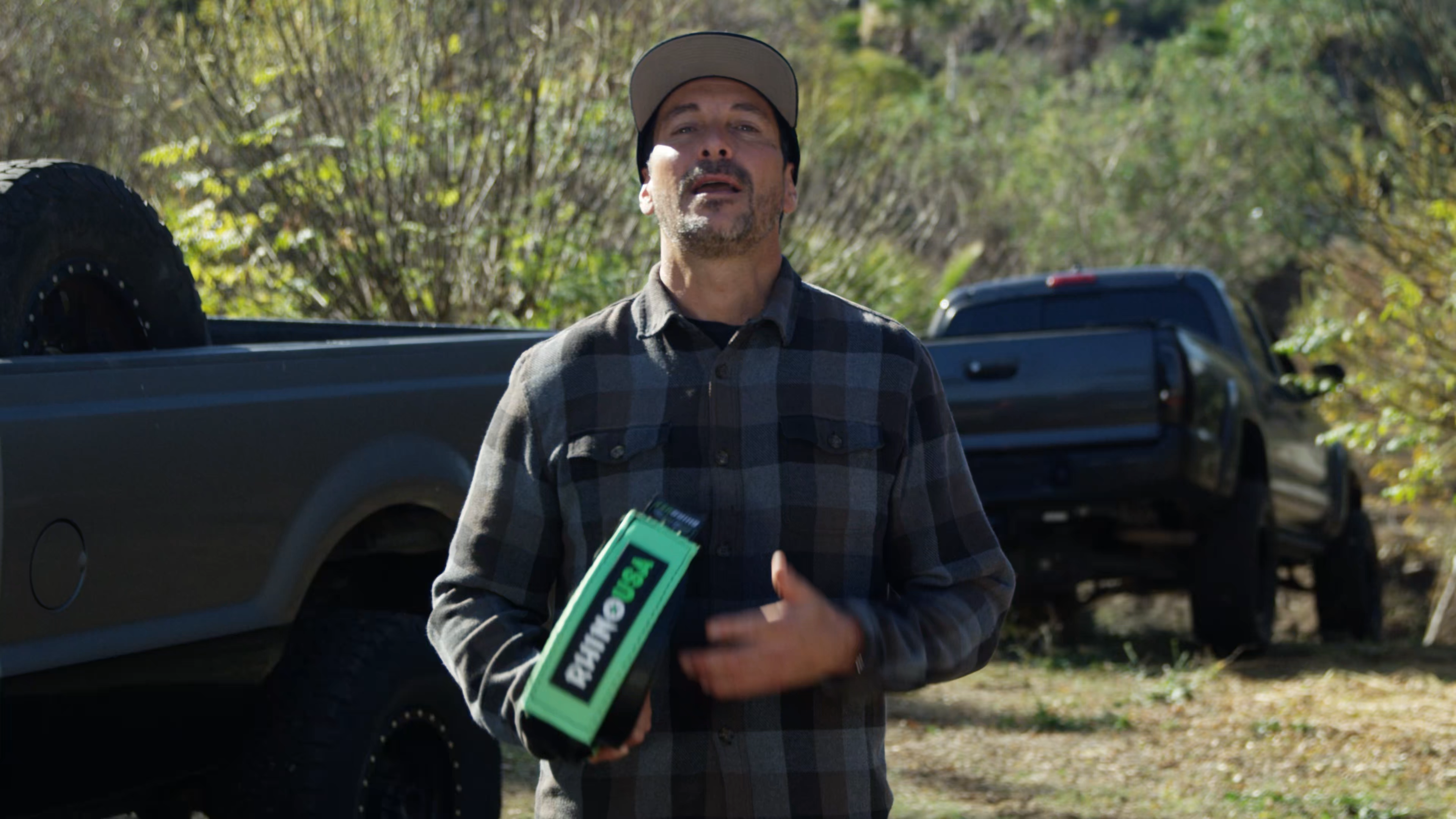
1. Rhino USA Ultimate Recovery Tow Strap
https://cdn.shopify.com/videos/c/o/v/10867deb1fb644d48816e38f17fa61be.mov
This recovery strap is made from high-quality nylon, which is ideal for vehicle recovery situations. It can also be used in conjunction with a winch to provide effective and safe vehicle recovery, ensuring you have the right equipment for winching applications.
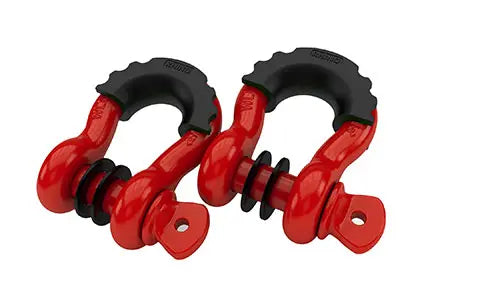
2. Rhino USA D-Ring Shackles
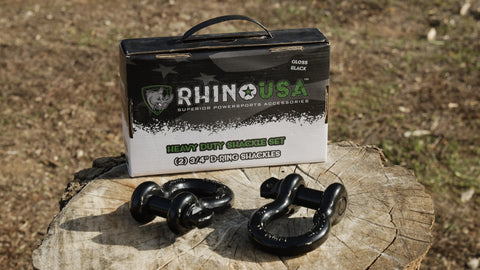
D-ring shackles are a stronger, more secure way to attach your kinetic rope or recovery tow strap to another vehicle. They are commonly used to securely connect the pulling vehicle to the stuck vehicle during recovery operations. The Rhino USA 3/4” D-Ring shackles are made of the strongest, more durable materials and have a break strength over 40,000lbs. Don’t skimp out on top-notch quality and safety!
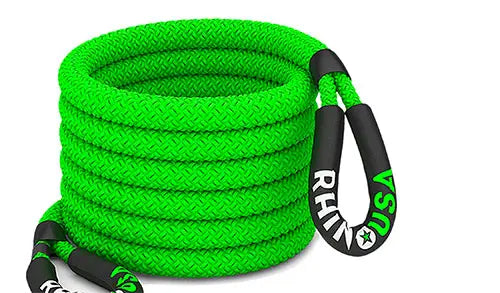
3. Rhino USA Kinetic Recovery Rope

Rhino USA’s Kinetic recovery rope is the safest and most effective way to recover a stuck vehicle. The Rhino USA kinetic rope is made of double braided nylon and a urethane polymer coating and can store up to 4x more energy than a traditional tow strap. The kinetic recovery rope pairs perfectly with soft shackles or 8-ton super shackles. It’s lightweight and easy to throw in the back of your Jeep, making it convenient for off-road adventures. You can also use the kinetic rope as a sling for vehicle recovery, providing a secure and flexible attachment point. In a recovery situation, applying the skinny pedal (gas pedal) while using a kinetic rope can help generate the extra momentum needed to free a stuck vehicle, but always use caution to avoid risky maneuvers.
We want to sincerely thank you for taking the time to read this article, by doing so you are showing your commitment to protecting yourself and others when performing a vehicle recovery. If you have any questions regarding vehicle recovery, call us at +1 (800) 575-7310 to speak to a helpful team member.

FAQs
Where to attach a tow strap without hooks?
The best way to attach a recovery tow strap without hooks is by using a shackle hitch receiver. A shackle hitch receiver fits all standard 2” receivers instead of attaching a tow strap to a 2” ball (very dangerous!). The shackle hitch receiver has a d-ring shaped connection point for your recovery tow strap or kinetic rope, and has a break strength over 41,000lbs.
When recovering two vehicles, always use proper attachment points such as frame-mounted recovery hooks, D-rings, or shackles. Never attach a strap to the wheel or suspension components, as this can cause serious damage or injury. Proper recovery points are designed to handle the tension and force involved in vehicle recovery.
Can I use a recovery strap for towing?
Recovery straps and tow straps have different designs and purposes, and while they may appear similar, they are intended for distinct applications. It is generally not recommended to use a recovery strap for towing, especially for regular towing operations.
Some straps are supposed to be for recovery, but may not actually meet the requirements for safe vehicle recovery. Always check that the strap you are using is appropriate for the task.
Recovery straps are designed to withstand the shock-loading that occurs during vehicle recovery operations, such as pulling a stuck vehicle out of mud or snow. They are built with elasticity to absorb and distribute the force generated during recovery. Towing straps, on the other hand, are typically sturdier and less elastic, designed to provide a consistent and controlled pull without excessive stretching.
Maintaining steady, even tension in the strap during recovery or towing is crucial for safety and effectiveness. Sudden jerks or slack can lead to accidents or vehicle damage.
It is recommended to use a braided tow strap for towing and a proper recovery strap for getting cars unstuck.
- Choosing a selection results in a full page refresh.